
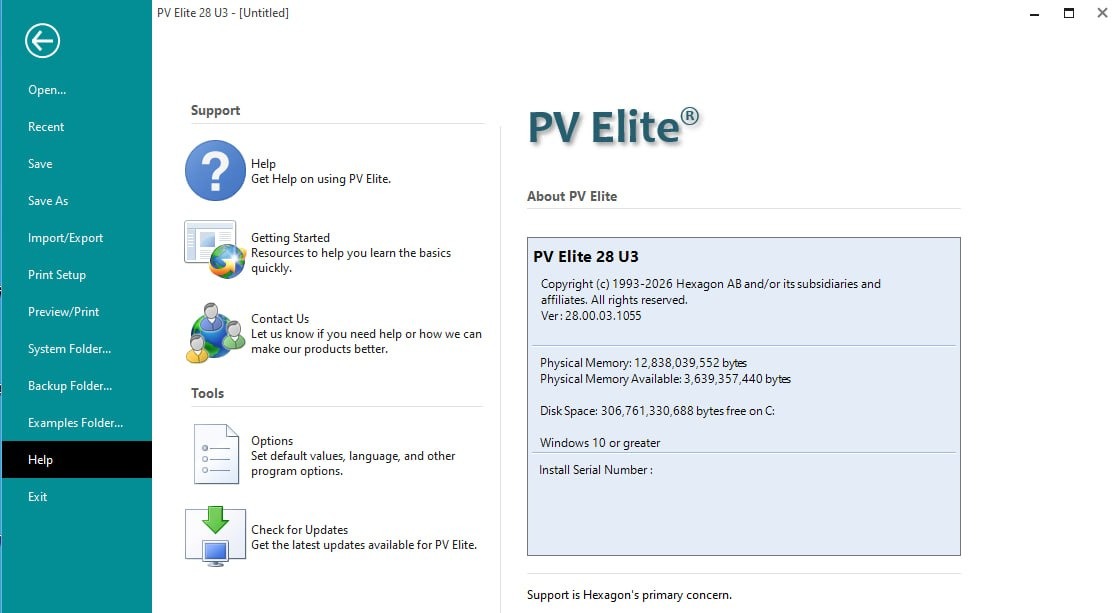
Hexagon PV Elite 28 U3 – Advanced Pressure Vessel Design & Analysis Software
Designing pressure vessels involves detailed engineering calculations, accurate component dimensions, and careful consideration of operating conditions. Engineers must examine pressure limits, material properties, structural loads, and applicable design standards to develop reliable equipment. Hexagon PV Elite 28 U3 provides specialized tools that help engineering professionals manage these requirements through an integrated design and analysis environment.
The software is designed for pressure vessel engineers, mechanical designers, and industrial equipment specialists. It supports vessel modeling, code-based calculations, component evaluation, and engineering documentation. Its capabilities also extend to selected heat exchanger design and analysis activities.
Overview of Hexagon PV Elite 28 U3
Hexagon PV Elite 28 U3 is an engineering application developed for the design, evaluation, and analysis of pressure vessels and related equipment. It allows users to create equipment models, specify operating parameters, select materials, and perform calculations according to supported engineering codes.
Engineers can work with different vessel arrangements, including horizontal and vertical vessels, cylindrical shells, conical sections, heads, and other mechanical components. The software provides a structured approach to defining equipment geometry and reviewing design information.
In addition to new equipment design, PV Elite can assist with engineering assessments of existing pressure vessels. This makes it useful for professionals involved in equipment design, plant modifications, maintenance planning, and mechanical integrity evaluations.
Main Features of PV Elite 28 U3
1. Detailed Pressure Vessel Modeling
The software offers modeling capabilities that allow engineers to develop pressure vessel configurations by adding and defining individual components. Users can specify shell sections, heads, cones, flanges, supports, and other relevant elements.
Design parameters such as dimensions, thicknesses, material specifications, and operating conditions can be entered into the model. This organized modeling process helps engineers review the equipment arrangement and prepare it for subsequent calculations.
2. Engineering Code Compliance
Pressure vessel design must follow applicable engineering standards and regulatory requirements. PV Elite supports code-based calculations that help engineers evaluate equipment against recognized design rules.
Supported standards include requirements from the ASME Boiler and Pressure Vessel Code, alongside other applicable international design codes. Version 28 introduced support for the ASME Section VIII 2025 edition.
Selecting the correct code edition is important because calculation requirements can vary depending on the governing standard and project jurisdiction. Engineers should confirm the applicable requirements before finalizing a design.
3. Structural and Stress Evaluation
Pressure vessels experience different mechanical loads during manufacturing, transportation, installation, and operation. Evaluating these conditions is an important part of the engineering process.
PV Elite provides calculation tools for assessing relevant stresses and design conditions. Depending on the equipment configuration, engineers can consider internal pressure, external pressure, temperature effects, wind loading, seismic forces, and other applicable conditions.
The resulting calculations help identify components that may require further investigation or design modification.
4. Nozzle and Flange Design Checks
Nozzles and flanges require particular attention because they form important connections within pressure vessel systems. Their geometry and loading conditions can influence the mechanical behavior of the equipment.
PV Elite includes calculation capabilities for evaluating nozzle and flange requirements. Engineers can define component dimensions, material properties, and relevant loading information to perform the necessary design checks.
Update 3 introduces corrections and refinements related to selected nozzle calculations, pressure-loaded areas, nozzle load checks, and maximum allowable working pressure evaluations.
5. Heat Exchanger Engineering
Apart from pressure vessel design, PV Elite provides functionality for analyzing selected heat exchanger components. These capabilities are useful when engineers need to evaluate mechanical design requirements for exchanger equipment.
The software includes support for relevant tubesheet calculations and expansion-joint analysis. Users can enter the required design information and review the resulting engineering calculations.
These tools help organize mechanical evaluations for equipment used in industrial processing and other applications.
6. Material Selection and Database Management
Choosing suitable materials is essential for achieving the required mechanical performance and design conditions. Material properties influence calculations involving strength, pressure, temperature, and component thickness.
PV Elite includes material database features that help engineers manage material information within their projects. Version 28 also introduced an updated Unit Database Editor, allowing users to add or modify custom materials.
Update 3 includes changes to the ASME material database based on referenced errata corrections. Engineers should still verify material specifications against approved project documentation and applicable standards.
7. Calculation Reports and Documentation
Technical documentation plays an important role in engineering verification and project communication. PV Elite provides reporting functionality for presenting design information and calculation results.
Generated reports can include equipment details, component calculations, and relevant analysis outputs. These documents can assist engineering teams during design reviews and provide useful records for project documentation.
Improvements Included in PV Elite 28 U3
PV Elite Version 28 introduced improvements to its engineering environment and code-related capabilities. Update 3 builds on that release by addressing selected calculation issues and technical refinements.
Important areas covered by Update 3 include:
- Material database corrections: Incorporates referenced updates from ASME Errata Recommendation 26-1027.
- Nozzle load verification: Adds reporting checks for specified nozzle load calculation requirements.
- Nozzle design refinements: Addresses selected calculation cases involving oblique nozzles, multiple nozzles in knuckle regions, and pressure-loaded areas.
- MAWP calculations: Includes corrections affecting certain nozzle and flange-related maximum allowable working pressure evaluations.
- International design standards: Addresses selected calculation cases associated with EN 13445, PD 5500, and AD 2000 requirements.
- Heat exchanger analysis: Includes refinements for certain tubesheet, expansion-joint, and related calculation scenarios.
These updates are intended to improve selected engineering calculations and reporting behavior. Their relevance depends on the design configuration, chosen code, and input parameters used in a particular project.
Where Is PV Elite Used?
PV Elite is relevant to industries that design, manufacture, operate, or inspect pressure-containing equipment. Its engineering capabilities can support several types of industrial projects.
Oil and Gas Industry
Engineering teams can use the software to evaluate pressure vessels and related equipment used in production, processing, and other industrial operations.
Chemical and Petrochemical Facilities
Chemical processing plants use different types of pressure-containing equipment. PV Elite can assist engineers with vessel modeling and mechanical design calculations for applicable equipment.
Power Generation
Pressure vessel engineering is important in various power generation facilities. The software can support design assessments for equipment operating under specified pressure and temperature conditions.
Heat Exchanger Projects
Its heat exchanger calculation capabilities can assist with selected mechanical evaluations involving tubesheets, expansion joints, and related components.
Existing Equipment Assessment
Engineers may also use PV Elite when reviewing existing vessels or examining proposed changes to equipment design and operating conditions. Such assessments require appropriate inspection data and qualified engineering judgment.
Advantages for Engineering Professionals
PV Elite brings several important engineering activities together in one application. Its modeling environment allows users to organize vessel components, while its calculation tools support the evaluation of different design conditions.
The ability to work with recognized engineering standards is another important aspect of the software. Material database functionality and component-level calculations can help engineers manage technical information more systematically.
Its reporting features also support the preparation of engineering documentation for internal reviews and project records. For teams handling different pressure vessel configurations, an organized modeling and calculation workflow can improve the management of design tasks.
However, software-generated results should always be checked by qualified professionals before they are used for manufacturing, inspection, or operational approval.
Conclusion
Hexagon PV Elite 28 U3 provides a dedicated engineering environment for pressure vessel design, structural evaluation, and selected heat exchanger calculations. Its modeling tools, material database, code-based calculation capabilities, and technical reporting functions make it a useful option for mechanical and pressure vessel engineering work.
The improvements introduced in Version 28 and Update 3 address various design and calculation requirements, including selected nozzle, flange, material database, and heat exchanger analysis cases. By combining these capabilities within one workflow, PV Elite helps engineering professionals organize complex equipment design tasks and review important mechanical requirements.
Our Paid Service
If you want to Purchase Cracked Version / KeyGen Activator /License Key
Contact Us on our Telegram ID :
Crack Software Policies & Rules:
Lifetime Activation, Unlimited PCs/Users,
You Can test through AnyDesk before Buying,
And When You Are Satisfied, Then Buy It.
 saif